China has become a major manufacturing base for laboratory furniture, serving universities, hospitals, pharmaceutical facilities, and industrial testing centers. Yet price alone should not decide a laboratory purchase. A durable workbench, fume hood, or storage cabinet must support safety, workflow, cleaning, and long-term maintenance.
This guide explores the China Top 10 reasons to buy laboratory furniture from factories. It addresses a practical question: why is it better to buy laboratory furniture directly from factories? Direct communication can reduce misunderstandings between drawings, materials, and final production. Buyers may also receive clearer quotations, faster technical feedback, and more flexible customization. For example, a factory engineer can adjust a 1,500-millimeter workbench, select chemical-resistant surfaces, or reserve service openings for gas and electrical lines.
Factory visits and video inspections can reveal important details. Look for welding quality, edge finishing, powder-coating consistency, and load-testing records. Reliable manufacturers should explain material grades, production controls, installation procedures, and after-sales support. Certifications and test reports also deserve careful verification.
Direct purchasing is not automatically better. Some factories communicate poorly or lack export experience. A low quotation may hide weak hardware, unclear packaging, or expensive installation work. Buyers should compare drawings, specifications, warranties, and inspection standards before placing an order. That extra review takes time. It can prevent costly changes after delivery.
The following points offer an evidence-based introduction to factory sourcing. They reflect practical purchasing experience, but every laboratory has different risks, budgets, and technical requirements. Building a clear checklist remains essential.
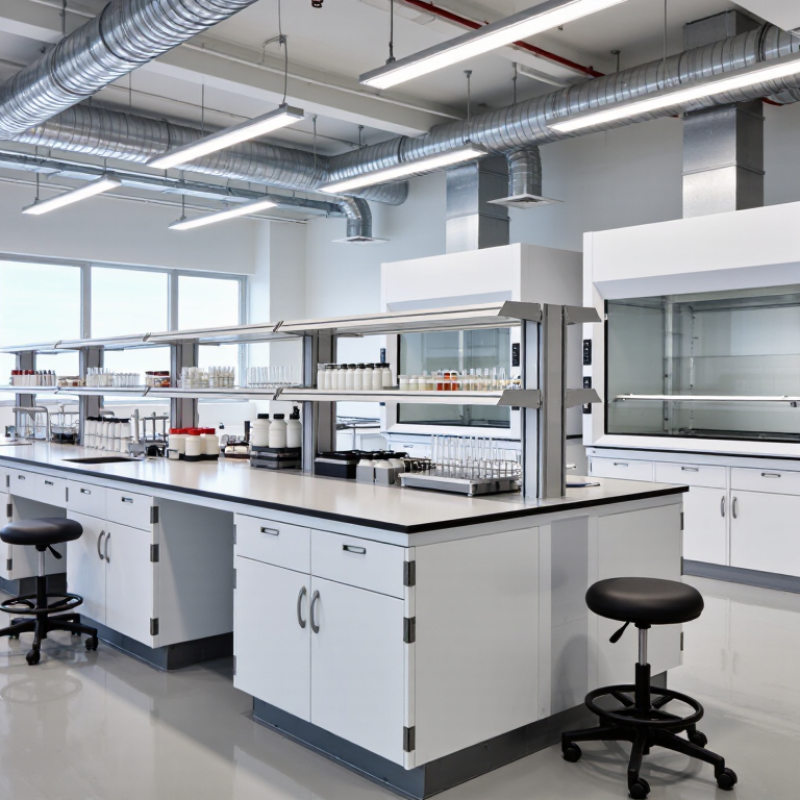
Laboratory furniture includes workbenches, storage cabinets, sinks, shelving, stools, and service supports for power, water, or gases. Some rooms also need specialist enclosures, such as fume cupboards, specified for the work being performed. A bench may look simple, but its frame, surface, and load rating affect daily use. Epoxy resin, stainless steel, and chemical-resistant laminate each suit different conditions; no material is ideal for every laboratory. Check the substances used, cleaning routine, and equipment weight before choosing a surface.
Good furniture helps keep workflows clear and reduces avoidable strain. For example, placing frequently used glassware between waist and shoulder height can limit awkward reaching. Separate storage for clean supplies and waste also makes bench work easier to manage. Details matter. A sink that interrupts a preparation area, or a cabinet door that blocks a walkway, can create frustration every day. Fixed layouts are not always the best answer; future changes in instruments or team size deserve attention. Measure the room, verify service connections, and ask how damaged surfaces or hardware can be maintained. Even a careful plan can miss something. That is worth reviewing before installation.
Laboratory furniture quality begins with the materials, not the finished cabinet. In a well-managed factory, staff check steel thickness, surface condition, and supplier documents before production. Damaged sheets or inconsistent coatings can affect durability and cleanability. Details matter.
During fabrication, workers follow drawings and inspect key dimensions, welds, and edge finishes. A fume hood cabinet, for example, needs correctly aligned panels and secure joints. Technicians may test doors, drawers, hinges, and load-bearing shelves before packing. These checks help catch problems while repairs are still practical. Still, variation happens. A reliable process records measurements and identifies who completed each inspection, rather than relying on memory.
Quality control should continue through surface treatment and final assembly. Factories can check coating adhesion, color consistency, and visible defects under clear lighting. They may also assemble representative units to confirm fit and function. Ask how inspection results are documented and how a failed item is handled. Photos, test records, and traceable production details offer more useful evidence than a general quality claim. No inspection plan catches everything, so feedback from installation and daily use should inform later production adjustments.
How quality controls can be built into each production stage
Example 10-point factory checklist
Checks may include verifying material specifications and dimensions, inspecting welds and finished edges, testing surface-coating properties, checking assembly fit and stability, and inspecting final packaging. The chart shows an illustrative checklist distribution, not measured industry data or a claim about every factory. Ask suppliers for the relevant inspection records and test reports.
Factory pricing can make Chinese laboratory furniture competitive by reducing distributor markups and allowing buyers to discuss specifications directly with production teams. UNIDO’s International Yearbook of Industrial Statistics 2024 reports that China produced about 31.8% of global manufacturing value added in 2022. That scale supports established supply networks for steel cabinets, compact laminate worktops, hardware, and surface finishes. The savings are real—but not automatic.
Ask for an itemized quotation. Compare steel thickness, coating method, worktop material, edge finishing, and packing details, not just cabinet dimensions. Request material records and inspection photos for the actual order. The World Bank’s 2023 Logistics Performance Index ranked China 19th among 139 economies, but this broad ranking cannot predict your shipment’s freight cost or arrival date. Freight, installation, import charges, and local adjustments can narrow the factory-price advantage. A low quote can still disappoint. I would also check whether the supplier prices replacement parts and documents changes clearly; these details are easy to overlook. Factory-direct buying works best when drawings, tolerances, and delivery terms are agreed before production begins.
Laboratories rarely share the same workflow. A teaching lab may need open benches for group work, while a testing room may require stable surfaces and clearly separated work zones. Custom laboratory furniture lets teams plan around actual tasks, available floor space, and equipment dimensions instead of forcing every room into one standard layout.
A factory can adjust bench lengths, cabinet sizes, storage arrangements, and service access to fit a project’s requirements. For example, a sink placed near a wet-work area can reduce unnecessary movement, while drawers sized for common tools help keep the worktop clear. Material choices should reflect cleaning routines, moisture exposure, and the substances handled. There is no single surface that suits every laboratory. That detail is easy to overlook.
Customization also supports changes in staff needs and equipment. Adjustable seating, accessible storage, and planned cable routes can make daily work more practical. Sharing room measurements, equipment lists, and workflow drawings with the manufacturer helps clarify the design before production. Even a careful plan can miss something; a door swing or service connection may interfere with a cabinet. Reviewing drawings with the people who use the room can catch these issues early, though it takes time.
| Laboratory Requirement | Common Design Consideration | Factory Customization Option | Practical Benefit |
|---|---|---|---|
| Chemical handling | Worktop materials need to suit the chemicals, concentrations, and exposure conditions used in the lab. | Select compatible worktop materials and edge details based on the laboratory’s chemical-use information. | Helps match the furniture surface to the application; no single material is suitable for every chemical. |
| Room dimensions and layout | Walls, doors, columns, windows, and service points can limit standard furniture dimensions and placement. | Adjust bench lengths, depths, cabinet arrangements, and corner configurations to the measured floor plan. | Supports a layout designed around the available space and intended workflow. |
| Utilities and equipment | Benches may need to accommodate sinks, electrical outlets, gas points, data connections, or specific instruments. | Plan service cutouts, access panels, equipment clearances, and utility locations in coordination with the project design. | Can reduce clashes between furniture and planned services when layouts are coordinated before installation. |
| Storage needs | Different workflows require different combinations of drawers, shelves, cupboards, and open access. | Configure cabinet types, internal shelves, drawer sizes, and storage positions for the intended items. | Keeps frequently used supplies closer to their point of use; hazardous materials should follow applicable storage rules. |
| Ventilation and containment equipment | Fume cupboards and other containment devices require appropriate clearances and coordinated building services. | Coordinate furniture dimensions and adjacent benching with the selected equipment and site service plan. | Helps prevent layout conflicts; ventilation performance must be assessed and commissioned as a complete system. |
| Ergonomics and accessibility | Working height, knee clearance, reach distances, and circulation space affect how users interact with benches. | Specify suitable bench heights, seated work areas, adjustable components, and access clearances where needed. | Allows the design to account for different tasks and users; dimensions should be checked against applicable accessibility requirements. |
| Cleaning and hygiene | Surface finish, joints, edges, and access beneath furniture influence routine cleaning. | Choose cleanable finishes and details suited to the cleaning agents and hygiene practices specified for the lab. | Supports maintenance routines when material compatibility and cleaning instructions are followed. |
| Load and equipment support | Instruments and stored items impose different loads and may require stable, appropriately supported surfaces. | Provide equipment dimensions and expected loads so the frame, supports, and worktop can be specified accordingly. | Helps align the furniture design with the equipment; load capacity should be confirmed for the final configuration. |
| Future changes to the laboratory | Research programs, equipment, and storage needs can change over time. | Consider modular bench sections, replaceable components, and accessible service routes where appropriate. | May make later rearrangement or component replacement easier, subject to the building services and project design. |
| Project coordination and quality checks | Furniture must fit the approved drawings, specified materials, and site conditions. | Review drawings, material samples, dimensions, and agreed inspection criteria before production and delivery. | Direct design coordination can clarify requirements early; confirm scope, tolerances, testing, and installation responsibilities in writing. |
Before choosing a Chinese laboratory furniture factory, verify how it builds, tests, and documents each product. Ask for a factory video, production address, and recent project references. A polished showroom proves little. Check cutting equipment, edge sealing, welding areas, and finished-unit storage. During a video call, request close views of work in progress, not only prepared samples. This small check can reveal inconsistent workmanship.
Material control deserves careful attention. Request specifications for steel thickness, powder coating, chemical-resistant surfaces, hinges, sinks, and worktop cores. Ask how batches are inspected and how defects are recorded. Independent test reports are useful, but confirm their dates, scope, and matching product models. A factory should explain load capacity, ventilation compatibility, moisture resistance, and cleaning requirements clearly. Vague answers are warning signs. I would also order a sample cabinet before approving a large project. It may cost more, but it exposes poor alignment, sharp edges, or weak packaging early.
Reliable suppliers provide drawings, a bill of materials, inspection photographs, packing details, and a realistic delivery schedule. Confirm who handles dimensional changes and replacement parts. Agree on acceptance criteria before production starts. Keep every revision in writing. Communication can still fail, even with capable engineers. Time zones, translated measurements, and rushed approvals create avoidable errors. Leave room for one design correction. A perfect first proposal is not always realistic. Evaluate after-sales response as carefully as the quotation, because laboratory furniture must remain safe, stable, and serviceable after installation.
Staff should inspect steel thickness, surface condition, coating consistency, and supplier records. Small flaws matter.
Workers can compare key dimensions with drawings and inspect welds and edge finishes. Keep measurement records.
Check that panels align and joints feel secure. Test doors and hinges for smooth movement.
Test drawers, shelves, and other moving parts. A representative unit can reveal poor fit.
Ask about coating adhesion, color consistency, and visible defects under clear lighting. Photos can help.
Request inspection records, photos, and traceable production details for the actual order. General claims are weaker evidence.
Compare steel thickness, worktop material, coating method, edge finishing, and packing details. Cabinet size alone is not enough.
Freight, installation, import charges, and local adjustments can reduce the savings. Ask about replacement-part prices, too.
Agree on drawings, tolerances, and delivery terms before production starts. I would check how changes are documented; that detail is easy to miss.
Laboratory furniture includes workbenches, storage cabinets, sinks, fume hoods, laboratory seating, and other specialized fixtures designed to support safe, organized, and efficient work. Understanding why is it better to buy laboratory furniture directly from factories helps buyers evaluate the benefits more clearly. Chinese factories can manage material selection, production processes, structural testing, surface treatment, and quality inspections within one supply chain, helping maintain consistent performance and reduce communication delays.
Factory-direct purchasing can also provide more competitive pricing by reducing unnecessary intermediaries and allowing efficient large-scale production. At the same time, many factories offer customization for different laboratory layouts, equipment sizes, workflows, safety requirements, and budget levels. Before choosing a supplier, buyers should review product specifications, material quality, manufacturing capabilities, inspection procedures, customization support, packaging standards, delivery capacity, and after-sales communication. A reliable factory should provide clear technical information and practical solutions suited to the laboratory’s long-term operational needs.

Layanaa Furniture