Top 10 Reliable School Furniture Manufacturers in China

Time:2026-09-25 Author:Isabella
0%

Finding dependable school furniture suppliers requires more than comparing prices or browsing polished websites. This guide, “Top 10 Reliable School Furniture Manufacturers in China,” focuses on practical evidence from factory evaluation, product checks, and buyer experience. It also explains how to find reliable school furniture manufacturers in China without relying on promises alone. A trustworthy manufacturer should provide clear material specifications, stable production capacity, and documented quality procedures. Important details include rounded desk edges, smooth welds, adjustable chair legs, and durable powder-coated steel. Sample products should feel stable when moved across a classroom floor. Their surfaces should resist ordinary scratches, stains, and repeated cleaning.

Reliability also depends on communication after the order leaves the factory. Buyers should review inspection reports, packaging methods, loading photos, and replacement policies. Factory audits can reveal useful facts, such as organized storage, labeled components, and workers checking dimensions before packing. Export experience matters, but it does not guarantee perfect results. No supplier is flawless. A sample may look excellent while a larger batch shows small color or alignment differences. That risk deserves honest discussion. This list considers manufacturers that demonstrate consistent processes, responsive service, and a willingness to correct mistakes. It is not a shortcut to due diligence. Schools should still verify certifications, request current samples, and confirm delivery schedules before signing contracts. Small checks often prevent expensive classroom problems later.
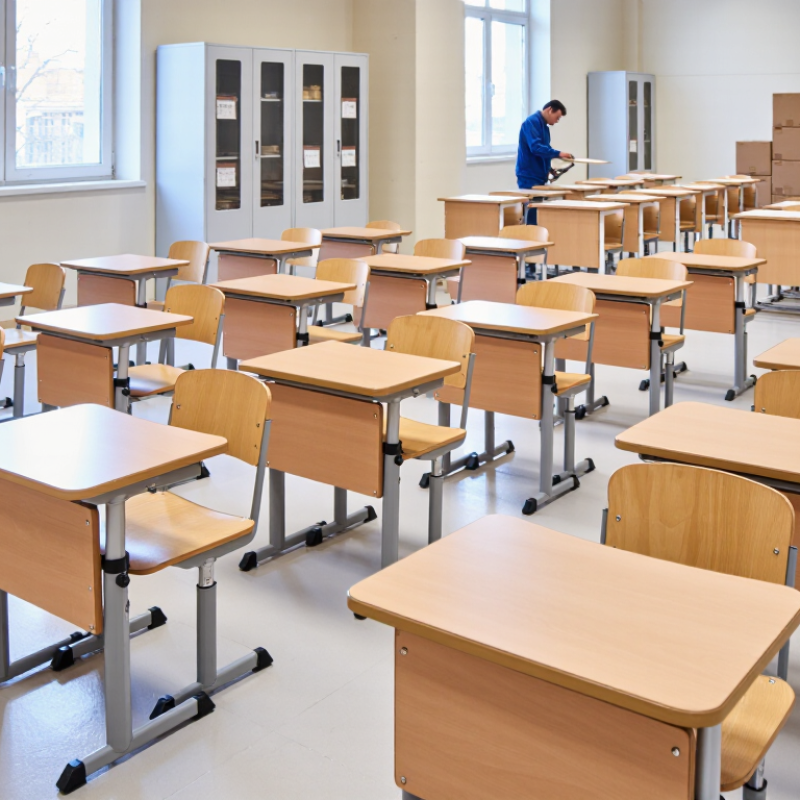
Top 10 Reliable School Furniture Manufacturers in China

How School Furniture Manufacturing in China Is Evaluated

A dependable school-furniture supplier should be assessed through evidence, not catalogue photographs. The National Bureau of Statistics of China reported RMB 655.7 billion in operating revenue for furniture manufacturers above designated size in 2023. This sector-wide figure shows the industry’s scale, but says nothing about an individual factory’s classroom products. Keep that distinction clear.

Evaluation begins with product fit. Check desk and chair dimensions against GB/T 3976-2014, and confirm that the proposed sizes suit the intended age groups. Ask for independent test reports covering the exact materials and product models being offered. Review stability, load performance, edge finishing, coating durability, and emissions documentation. Reports should identify test methods, dates, and sample details. A polished certificate alone is not enough.

Factory checks add useful context. Inspect welding seams, fasteners, panel edges, and how workers protect finished surfaces during packing. Compare a production sample with the approved specification, then review how defects are recorded and corrected. Small details matter. A minor mismatch can become a classroom-wide problem. Still, audits capture only a moment; production can vary later. Buyers should define acceptance criteria in writing and retain samples for comparison before shipment.

Key Criteria for Identifying Reliable Chinese Manufacturers

A reliable school furniture manufacturer should make its quality visible, not just describe it in a catalogue. Ask for material specifications, product drawings, and test reports for the exact desks or chairs you plan to order. Check frame thickness, joint construction, rounded edges, and the stability of adjustable parts. Details matter. A polished sample is useful, but it may not represent every unit in a large production run.

Assess quality controls at the factory. Ask how incoming materials are checked, how defects are recorded, and whether finished products undergo load or stability tests. Request recent references from comparable school projects, then confirm that the products supplied matched the approved samples. Verify certificates with the issuing organization where possible. A certificate alone cannot prove consistent production, and a factory visit may reveal issues that documents miss.

Tips: Put dimensions, materials, finishes, packaging, delivery dates, and warranty terms in the purchase specification. Ask who handles replacement parts and how quickly they can respond. Compare lead times against the production schedule, not just the sales promise. I would also ask for a small trial order; it adds time, but can expose mismatches before the full shipment.

Top 10 Reliable School Furniture Manufacturers in China

China’s school-furniture sector serves a vast education system. The Ministry of Education’s 2023 statistical bulletin counted roughly 143,500 primary schools nationwide. For buyers comparing reliable manufacturers, that scale makes production capacity and consistent quality essential. The Grand View Research School Furniture Market report estimated the global market at about US$4.7 billion in 2023, reflecting sustained demand for classroom desks, chairs, and storage.

A dependable manufacturer should provide clear material specifications, documented load testing, and repeatable dimensions. Check the underside of a desk: exposed sharp edges, loose fasteners, or uneven welds deserve questions. Ask for test records covering stability, strength, and surface durability, not just a glossy catalogue. Request a sample and inspect it after repeated adjustment. Small faults matter.

Factory audits can reveal whether quality checks happen during production or only before shipment. Confirm lead times, spare-part availability, packaging, and the process for handling damaged items. A low quote may omit installation or replacement costs. Paper claims can mislead. Even a well-made sample cannot guarantee every batch will match, so buyers should agree on inspection criteria before placing large orders.

Product Categories and Customization Services

School furniture manufacturers in China typically offer desks, chairs, storage units, library shelving, and classroom tables. Product ranges may also include science-lab benches, computer desks, and adjustable seating. The right category depends on room size, student age, and daily use. Details matter. A chair for a primary classroom needs different proportions from seating in a lecture room.

Customization often covers dimensions, materials, colors, edge finishes, and storage layouts. Buyers can request height-adjustable desks, rounded corners, or compact units for narrow classrooms. Some suppliers also adapt products to project drawings and combine several furniture types in one order. Clear specifications help: list room measurements, expected quantities, surface preferences, and intended use. Samples can reveal issues that drawings miss, such as a drawer that catches or a tabletop that feels too reflective.

Ask how materials, load capacity, and finish durability are checked before production. Written product data makes comparisons more reliable, though details may vary by model. A lower price is not always a better fit. Still, customization has limits; unusual sizes may affect lead times, cost, or replacement-part availability. That trade-off deserves attention. Confirming these points early can help schools choose practical furniture without assuming every catalog option suits every classroom.

How to Compare Suppliers and Verify Product Quality

Comparing school furniture suppliers takes more than reviewing catalog photos. Ask each manufacturer for the same specifications: desk dimensions, frame material, finish, load capacity, and packaging method. A clear answer makes quotations easier to compare. Vague promises do not. Shortlisted suppliers should provide recent production photos and explain how they inspect finished pieces.

Check a physical sample under ordinary classroom conditions. Measure the desktop and seat height; small differences can affect comfort across a full room. Look closely at welds, sharp edges, screw heads, and the bond between edge banding and the tabletop. Try moving the chair across a hard floor. Listen for looseness or squeaking. These simple checks will not replace laboratory testing, but they can reveal careless assembly. One easy mistake is judging quality by appearance alone.

Request material and inspection records that match the exact model being quoted. Confirm that sample materials, finishes, and construction details will be used in bulk production. Ask how defects are recorded and what happens when a batch fails inspection. Then compare packaging details: corner guards, moisture barriers, and carton strength matter when furniture travels long distances. A supplier may provide a strong sample yet deliver uneven batches, so agree on measurable acceptance criteria before ordering. Keep notes and dated photos from sample checks; memory gets fuzzy.

Top 10 Reliable School Furniture Manufacturers in China: How to Compare Suppliers and Verify Product Quality

This chart presents an illustrative 100-point supplier evaluation model, not measured results or rankings of manufacturers. Adjust the weights to fit your project, and verify claims with current test reports, product samples, factory audits, and contract terms.

FAQS

How should a school furniture manufacturer be evaluated?

Use evidence, not catalogue photographs. Review samples, test reports, factory processes, and written acceptance criteria. Small faults matter.

Which product details should buyers check?

Check desk and chair dimensions against GB/T 3976-2014. Confirm the sizes match student age groups and classroom use.

What should independent test reports include?

Reports should cover stability, load performance, edge finishing, coating durability, and emissions. They should identify methods, dates, materials, and samples.

Is a polished certificate enough?

No. A certificate may not match the proposed model or materials. Compare the report with the actual sample and specifications.

What should a factory inspection examine?

Inspect welding seams, fasteners, panel edges, and finished-surface protection. Review how workers record and correct defects during production.

Can one approved sample guarantee every shipment?

No. Audits and samples capture limited moments. Production may vary later, so retain samples and inspect each shipment against written criteria.

What school furniture categories are commonly available?

Common categories include desks, chairs, storage units, shelving, classroom tables, laboratory benches, and computer desks. Room size and student age should guide selection.

What can customization usually include?

Customization may include dimensions, materials, colors, edge finishes, storage layouts, and height adjustment. Unusual sizes can increase costs or delay replacement parts.

How can buyers compare prices fairly?

Check whether quotes include packaging, installation, spare parts, and damaged-item handling. A lower price may hide later costs.

What practical details should buyers test before ordering?

Open drawers, adjust chairs, inspect reflective tabletops, and check sharp edges. Drawings miss problems sometimes. Hands reveal more.

Conclusion

This article explains how school furniture manufacturing in China is evaluated and what buyers should consider when choosing a dependable supplier. It outlines practical criteria such as manufacturing experience, production capacity, material selection, quality-control procedures, communication, and delivery planning. The featured list of ten reliable manufacturers offers a starting point for comparing suppliers, while emphasizing that the best choice depends on each school’s needs, budget, and project requirements. The guide also explores common product categories, including classroom desks and chairs, storage units, and furniture for shared learning spaces, along with options for custom dimensions, colors, and configurations.

To understand how to find reliable school furniture manufacturers in China, buyers should compare more than prices and product images. They can request specifications, samples, relevant quality documentation, and clear details about inspection and after-sales support. By checking construction, finishes, durability, and consistency between samples and production items, buyers can make a more informed decision and select furniture suited to daily school use.

Isabella

Isabella

Isabella is a dedicated marketing professional with a sharp focus on driving brand growth and engagement through strategic content creation. With an extensive background in digital marketing, she combines her passion for storytelling with her keen understanding of industry trends to deliver......