7 Best Ways to Clean and Sanitize Hospital Furniture?

Time:2026-11-01 Author:Henry
0%

Hospital furniture is touched constantly. Bed rails, call buttons, tray tables, and chair arms can collect soil between room turnover and routine cleaning. CDC surveillance found that about one in 31 U.S. hospital patients had at least one healthcare-associated infection on any given day. That figure describes infections broadly; it does not mean furniture caused them. Still, it shows why dependable environmental hygiene matters.

How to clean and sanitize hospital furniture effectively begins with the right product, the correct contact time, and a repeatable process. WHO’s 2022 global report also documents the ongoing burden of healthcare-associated infections and the importance of prevention measures. CDC environmental infection-control guidance, associated with infection-prevention expert Dr. Michael Bell, treats environmental cleaning as part of infection prevention—not simply appearance. This is a paraphrase of the guidance, not a direct quotation. Follow the disinfectant label and facility protocol; wiping a surface before the required wet contact time has passed may undermine the process.

Details matter. Clean from less-soiled areas toward more-soiled ones, change cloths when needed, and give special attention to seams and handles. Small steps count.

This guide presents seven practical ways to clean and sanitize hospital furniture, while recognizing that materials, products, and facility procedures differ. A missed armrest is easy to overlook. That is exactly why checklists, staff training, and periodic observation deserve a place in the routine. Sources: CDC, NHSN 2015 patient safety component data; WHO, Global Report on Infection Prevention and Control, 2022; CDC, Guideline for Environmental Infection Control in Health-Care Facilities.
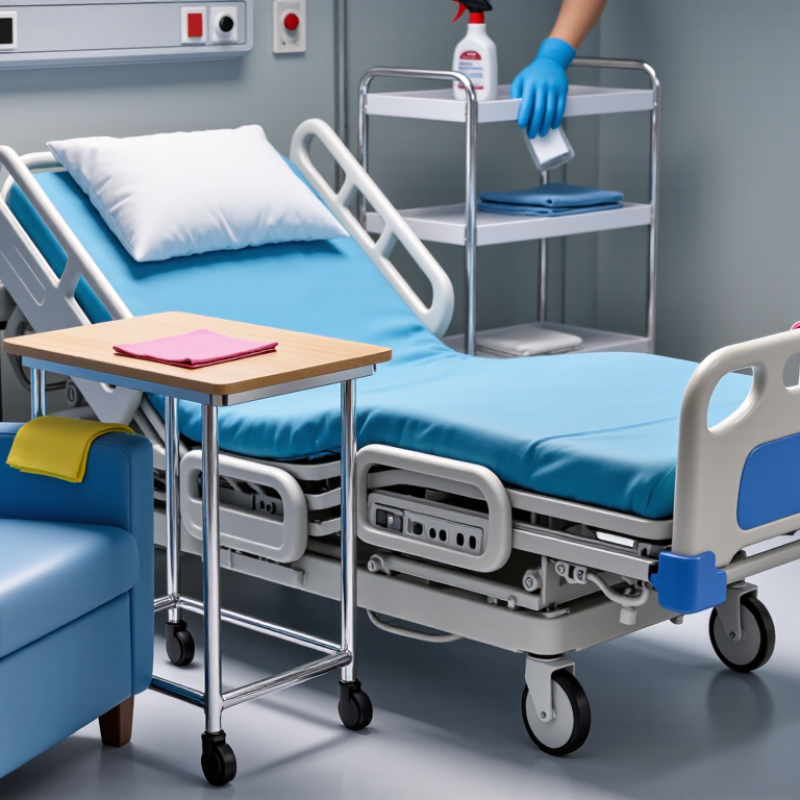
7 Best Ways to Clean and Sanitize Hospital Furniture?

Assess Furniture Materials and Follow Manufacturer Instructions

Hospital furniture may look alike, but its surfaces tolerate different cleaning methods. Check the material before choosing a disinfectant: vinyl upholstery, sealed wood, powder-coated steel, and touchscreens can react differently to moisture and chemicals. Inspect seams, armrests, and adjustment handles, where soil can collect. CDC’s Guidelines for Environmental Infection Control in Health-Care Facilities advise following manufacturers’ instructions for cleaning and disinfection products and equipment. This matters because a disinfectant’s required wet contact time may exceed the time a surface stays visibly damp. Small detail. Read the product label and furniture care guide together.

The CDC’s 2015 National and State Healthcare-Associated Infections Progress Report noted that, on any given day, about 1 in 31 U.S. hospital patients had at least one healthcare-associated infection. Furniture cleaning alone cannot prevent infections, but consistent attention to high-touch surfaces supports broader prevention efforts. Avoid assuming that a product safe for a hard frame is also suitable for upholstery or electronic controls. Test an approved method on an inconspicuous area when the manufacturer allows it. I have seen rushed wiping leave seams damp; that is a useful reminder to check the surface after cleaning.

Tips: Confirm material compatibility, dilution, and contact time before use. Use a clean cloth, and keep the surface wet for the label’s stated time. If instructions conflict or are unclear, pause and ask facilities or infection-prevention staff rather than guessing.

Remove Visible Soil Before Applying an Approved Disinfectant

Visible soil can shield microorganisms and reduce a disinfectant’s effectiveness. Clean the surface before applying an approved disinfectant. Wear the protective equipment required by your facility, then remove crumbs, body-fluid residue, and sticky marks with detergent and water. Use a clean cloth, turning it often so soil is not spread across the furniture. Pay close attention to armrests, handles, and seams where residue can collect.

Small details matter.

Work from cleaner areas toward visibly dirtier ones, and replace the cloth when it becomes soiled. Follow the furniture manufacturer’s care instructions to avoid damaging upholstery or finishes. Do not soak cushions or force liquid into joints. After cleaning, apply a disinfectant approved for the surface and follow its label, including the required wet contact time. Keep the surface visibly wet for that period; wiping it dry too soon can undermine the process.

A hurried wipe may look convincing. It may not be enough.

Check the surface under good light, and report damage or persistent stains through your facility’s cleaning procedure.

Disinfect High-Touch Surfaces and Shared Components

High-touch hospital furniture needs a repeatable routine, not a quick wipe when a surface looks dirty. Clean armrests, bed rails, call-button housings, chair controls, and table edges between patients or users, following facility protocols. CDC guidance identifies shared medical equipment and frequently touched surfaces as priorities for cleaning and disinfection. The CDC also reports that about 1 in 31 U.S. hospital patients has at least one healthcare-associated infection on any given day. This is not proof that furniture causes infections, but it shows why consistent environmental hygiene matters.

Remove visible soil with a compatible cleaner before applying disinfectant. Use a product approved by your facility for that surface, and keep it visibly wet for the label’s stated contact time. Don’t rush this step. Check seams, undersides, handles, and the small gap where a mattress meets a rail. Shared wheelchairs and bedside tables need attention between users, too. Inspect for cracked vinyl or damaged coatings; these areas can be harder to clean. A missed armrest edge is easy to overlook, and a completed checklist can still miss it.

Tips: Keep wipes and gloves available at the point of care. Work from cleaner areas toward dirtier ones, and change wipes when soiled. Follow the furniture and disinfectant instructions; never assume one chemical suits every finish. Record cleaning according to local policy, then spot-check the parts people actually touch. Small details matter.

7 Best Ways to Clean and Sanitize Hospital Furniture: Disinfect High-Touch Surfaces and Shared Components

Method Furniture and Surfaces Recommended Practice Frequency and Key Controls
1. Clean before disinfecting Bed frames, overbed tables, chairs, and other visibly soiled surfaces Remove visible soil with an appropriate detergent cleaner before applying a disinfectant. Follow the facility’s approved cleaning procedure. Clean when soiled and as part of routine cleaning. Soil can interfere with effective disinfection.
2. Disinfect high-touch points Bed rails, call-device housings, adjustment controls, handles, and chair arms Wipe all accessible high-touch areas using a disinfectant approved for the intended healthcare use and compatible with the surface. At the frequency set by facility policy, and promptly when visibly soiled or contaminated.
3. Keep the surface wet for the labeled contact time Hard, nonporous surfaces on beds, tables, and seating Apply the disinfectant according to its label. Keep the surface visibly wet for the full contact time stated on the product label. Do not wipe dry early unless the label directs this. Follow label instructions for rinsing, ventilation, and reuse.
4. Follow a consistent cleaning sequence Furniture in patient rooms and shared care areas Work systematically from cleaner areas toward dirtier areas, and from higher surfaces to lower surfaces. Use clean cloth surfaces to avoid spreading contamination. Change cloths and cleaning solutions according to facility procedure; never use a visibly soiled cloth on another surface.
5. Clean shared components between users Mobile chairs, transport stretchers, and reusable furniture moved between patients Clean and disinfect touched surfaces before the item is used by another patient, following its instructions for use and facility policy. Pay particular attention to handles, rails, adjustment points, and other frequently touched components.
6. Use products and methods compatible with the furniture Upholstery, mattress covers, coated surfaces, and electronic controls Check the furniture manufacturer’s instructions for use and the disinfectant label. Apply products to a cloth when required; avoid spraying directly into electrical parts or openings. Do not use unapproved chemicals or methods that can damage surfaces. Remove damaged or cracked items from service for assessment.
7. Protect staff and verify completion All furniture undergoing cleaning and disinfection Use the personal protective equipment required by the product label and facility policy. Train staff on procedures and check that required surfaces have been completed. Use cleaning schedules or checklists as appropriate. Report spills, damage, or missed cleaning so corrective action can be taken.

Important: Always follow the disinfectant label, the furniture’s instructions for use, and facility infection-prevention policies. Cleaning and disinfection requirements may vary by care setting, surface, and contamination event.

Use Compatible Methods for Upholstery, Mattresses, and Linens

Hospital furniture includes vinyl chairs, fabric cushions, sealed mattresses, and removable linens. Treating them alike can damage covers or leave soil in seams. Check care labels and facility-approved instructions before choosing a cleaner or disinfectant. The product must suit the material and intended use. Follow its stated wet contact time; a surface that dries too soon may not be properly disinfected. Small details matter.

For upholstery, remove visible soil with a soft cloth and use only a solution approved for that fabric. Avoid soaking foam, stitching, or zipper edges. A quick wipe can look finished while seams remain damp. Let surfaces dry fully before reuse, and report cracked vinyl or torn fabric, since damaged areas are harder to clean reliably. Never mix cleaning products.

Mattress covers need careful attention to seams, handles, and the underside, especially after spills. Follow the cover’s care instructions, then check for punctures or moisture trapped beneath it. Launder removable linens according to facility procedures and the required cycle. Handle soiled items gently and keep them separate from clean supplies. If guidance is unclear or a surface stays wet, ask environmental-services or infection-prevention staff rather than improvising.

Dry, Inspect, and Document Furniture Before Reuse

7 Best Ways to Clean and Sanitize Hospital Furniture?

Dry, Inspect, and Document Furniture Before Reuse

Let disinfectant work for its full label contact time, then allow the furniture to dry as directed. Wiping it dry too soon can shorten exposure. CDC guidance stresses following product instructions for healthcare surfaces, including required contact time. Drying matters, but it is not proof of cleanliness. This step is easy to rush.

Inspect the item under good lighting before returning it to service. Check seams, armrests, handles, wheels, adjustment controls, and the underside for moisture, soil, cracks, or peeling upholstery. Pay extra attention to joints where liquid can collect. If a surface is damaged or remains damp, hold the item for assessment rather than placing it beside a patient.

Documentation makes the process traceable. Record the furniture ID, cleaning time, staff initials, and any damage or follow-up needed. In a 36-hospital study, Carling and colleagues reported that only 47% of evaluated high-touch surfaces were cleaned. The finding is a useful reminder: a checklist and direct inspection can catch steps that routine work misses. Keep the record brief, legible, and linked to the item before reuse.

FAQS

Why should furniture material be checked before cleaning?

Vinyl, sealed wood, coated steel, and touchscreens tolerate different chemicals and moisture. Check the care guide first. Materials differ.

What should staff do before applying disinfectant?

Remove visible crumbs, sticky marks, and residue with detergent and water. Use a clean cloth, turning it often. Don’t spread soil around.

Which furniture areas need close attention?

Check seams, armrests, handles, wheels, adjustment controls, and joints. Soil and moisture can collect there, even when the surface looks clean.

How long should disinfectant remain on a surface?

Follow the product label’s wet contact time. Keep the surface visibly wet for that period. A quick wipe may not be enough.

Can one cleaning product be used on every furniture surface?

Not necessarily. A product suitable for a hard frame may harm upholstery or electronic controls. Check compatibility, dilution, and care instructions.

What should staff do if instructions are unclear?

Pause and ask facilities or infection-prevention staff. Guessing can damage a surface or interrupt the cleaning process. Better to check.

What should be inspected before furniture returns to use?

Under good lighting, check for remaining soil, moisture, cracks, and peeling upholstery. Hold damaged or damp items for assessment. Don’t rush this.

What details should cleaning records include?

Record the furniture ID, cleaning time, staff initials, and any damage or follow-up. Keep it brief and legible. A checklist can still miss things.

Conclusion

Learning how to clean and sanitize hospital furniture effectively starts with identifying each item’s material and checking its care instructions. Remove visible dirt and spills before applying a disinfectant approved for the surface, following the product’s directions for use and contact time. Give extra attention to high-touch areas and shared components, such as rails, handles, controls, and armrests, since these surfaces may be touched frequently by patients and staff.

Use cleaning methods that suit the furniture: upholstery, mattresses, and linens may require different products or handling than hard surfaces. Avoid methods that could damage materials or leave surfaces improperly treated. Once cleaning and disinfection are complete, allow items to dry, inspect them for residue or damage, and document the work according to facility procedures before returning furniture to use. These steps help support consistent care, protect furniture, and maintain a clean environment for the next patient.

Henry

Henry

Henry is a dedicated marketing professional with a profound expertise in the company's offerings. With years of experience in the industry, he possesses an impressive understanding of the market dynamics and consumer behaviors that drive success. Henry is committed to sharing his insights through......